Learn
Stage 2 Kidney Care for a 16-Year-Old Cat: Why Curly’s Stability Mattered

For this month’s kidney care case, we are sharing the story of Curly, a 16-year-old male cat.
Curly was born on March 23, 2010. His kidney concern was first identified during a routine wellness exam and bloodwork in December 2024.
Several kidney-related values were lower in June 2026 than they had been in December 2024. There was no dramatic turnaround.
But for a 16-year-old cat with ongoing kidney concerns, stability was not a small result.
Curly’s guardian described his current condition as follows.

For Curly’s guardian, this stability was meaningful.
Curly’s story offers four important lessons for other cat guardians.
- Act early.
- Monitor long-term trends.
- Check blood pressure as well as bloodwork.
- And build a care routine that can be continued every day.
Curly at a Glance

| Category | Details |
|---|---|
| Name | Curly |
| Age | 16-years-old male, born March 23, 2010 |
| Kidney Care Status | Kidney concerns identified in December 2024 |
| Weight | 12.76 lbs, stable over the last 12 months |
| Care Routine Started | Greycoat Dr. Toru, started in November 2025 |
| Current Additional Care | Porus One daily, amlodipine, and subcutaneous fluids |
An Experienced Kidney Care Guardian
Curly’s guardian had already cared for three other cats with kidney disease.
Curly was his fourth.
“Curly is my 4th cat with kidney disease. I have learned early and aggressive interventions are essential.”
That experience shaped the way he cared for Curly. He did not want to wait for one value to rise sharply. He wanted to act early.
He also wanted to monitor Curly closely. His care plan included regular bloodwork, blood pressure monitoring, hydration support, medication, nutritional care, supplements, and daily observation.
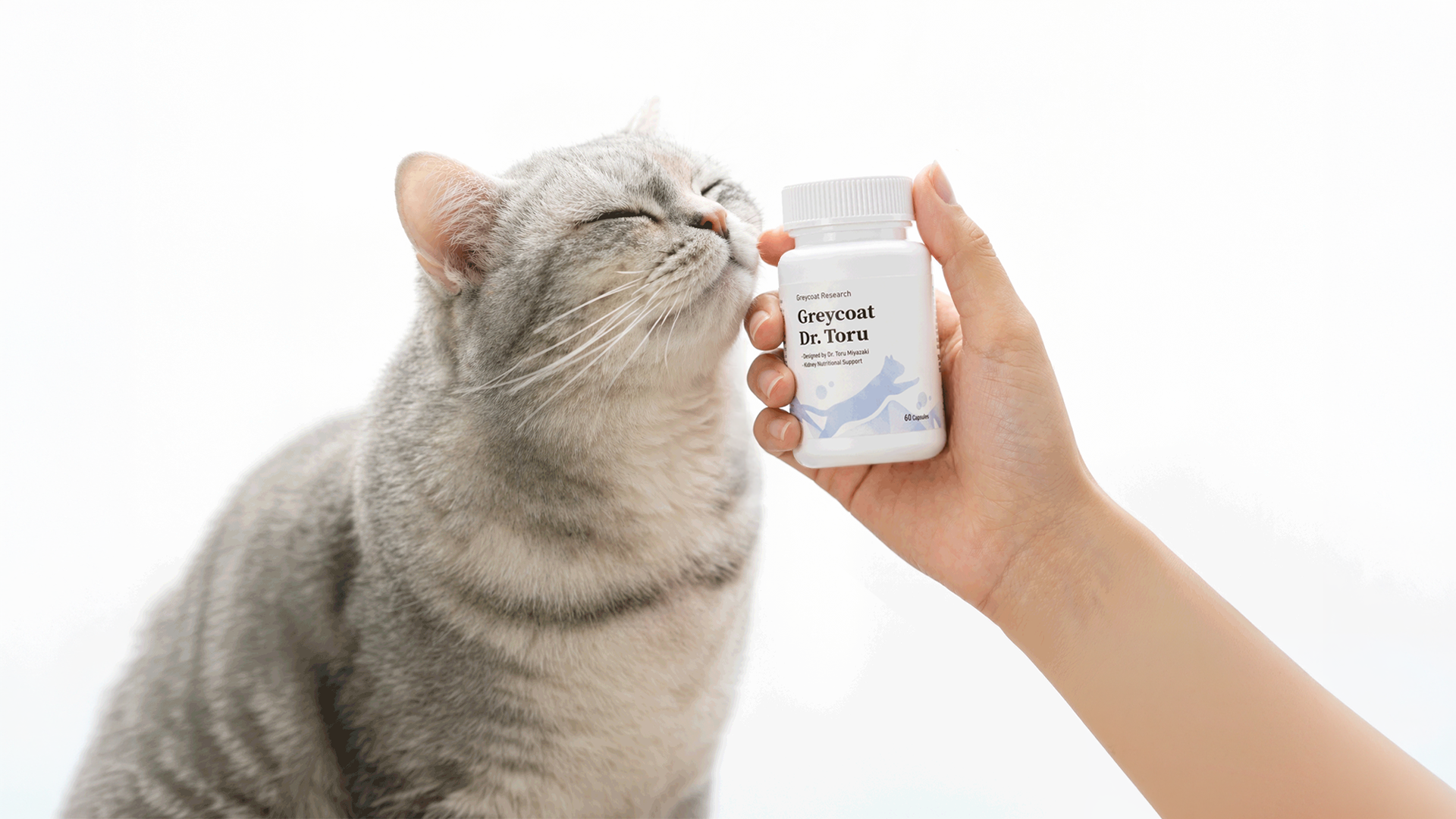
In November 2025, he added Greycoat Dr. Toru. It was the only Greycoat Research supplement used in Curly’s routine during this period.
Curly’s guardian did not add products without a clear reason. He had already learned that more supplements did not always mean better care.
He selected each part of Curly’s routine carefully. He then kept Greycoat Dr. Toru as one consistent part of that routine.
Curly’s Kidney-Related Lab Values
Curly’s available records show the following changes between December 2024 and June 2026.
Initial bloodwork results from December 16, 2024

Follow-up bloodwork results from June 20, 2026

| Test Item | December 2024 | June 2026 | Observation |
|---|---|---|---|
| Creatinine | 2.8 | 2.5 | Lower than the initial lab result |
| BUN | 44 | 37 | Lower than the initial lab result |
| SDMA | Not shown in the provided December 2024 image | 13 | Within the lab’s listed reference range in June 2026 |
| Phosphorus | 5.3 | 4.5 | Lower than the initial lab result |
By June 2026, Curly’s Creatinine, BUN, and Phosphorus were lower than they had been in December 2024. His SDMA was 13 µg/dL.
This was within the reference range shown on the laboratory report.
The December 2024 SDMA result was not available in the submitted record.
However, Curly’s guardian reported that additional tests during the previous 12 months showed stable SDMA, Creatinine, and BUN trends.
Greycoat Dr. Toru was added to Curly’s routine in November 2025, approximately seven months before the June 2026 bloodwork.
These results are best understood in the context of Curly’s broader care history, which included veterinary monitoring, subcutaneous fluids, Porus One, nutritional care, and daily observation.
Amlodipine was started on June 21, 2026, after the follow-up bloodwork shown above.
The changes in Curly’s bloodwork cannot be attributed to any one supplement.
What Curly’s Care Routine Included
① Greycoat Dr. Toru
Curly’s guardian added Greycoat Dr. Toru in November 2025. He added Greycoat Dr. Toru in November 2025 and continued using it over the following months. It was the only Greycoat Research supplement used during this period and remained a consistent part of Curly’s broader care plan.
Long-term kidney care is not only about adding new products. It is also about choosing a routine that the guardian can continue.
② Additional Daily Support
Curly receives one packet of Porus One every day.
His previous experience caring for cats with kidney disease had made him cautious about choosing supportive products.
“Not all supplements work as advertised.”
His goal was not to use as many products as possible.
Each product needed a clear purpose. It also needed to fit into Curly’s daily routine.
③ Blood Pressure and Veterinary Monitoring
Curly’s guardian monitors blood pressure along with kidney-related lab values.
Curly began taking amlodipine once daily on June 21, 2026, one day after the follow-up bloodwork shown above. His guardian gave one clear recommendation to other cat guardians.
“Monitor blood pressure along with lab values.”
Kidney monitoring should not focus only on Creatinine, BUN, and SDMA.
Blood pressure can also be an important part of ongoing veterinary care.
④ Hydration and Daily Observation
Curly receives 125 mL of subcutaneous fluids twice a week.
This hydration support is used alongside medication, nutritional care, supplements, blood testing, and daily observation. Each part of the routine has a role.
The goal is to build a complete care plan that can be continued over time.
Why Curly’s Story Matters
Curly did not suddenly become more energetic. He still sleeps often and needs continued monitoring and support. But his weight remained stable at 12.76 lbs.
Between December 2024 and June 2026, his Creatinine decreased from 2.8 mg/dL to 2.5 mg/dL, his BUN decreased from 44 mg/dL to 37 mg/dL, and his Phosphorus decreased from 5.3 mg/dL to 4.5 mg/dL.
His guardian also reported that his SDMA, Creatinine, and BUN remained stable over the previous 12 months.
For Curly’s guardian, this stability mattered.
He had already seen how difficult kidney disease could become to manage.
His experience had taught him not to wait for a crisis, but to watch long-term trends and keep asking questions.
“Take charge of your cat’s health, ask questions, and don't be afraid of obtaining a second opinion from another veterinarian or even a specialist.”
His advice is simple.
- Act early.
- Monitor bloodwork and blood pressure.
- And support hydration.
- Choose each supplement carefully.
- And seek another professional opinion when needed.
Curly’s care was built through veterinary monitoring, hydration support, medication, nutritional care, supplements, and daily observation. Greycoat Dr. Toru was one part of the broader routine his guardian carefully selected and maintained.
For Curly and his guardian, stability was not a small result.
It was the result that mattered most.
※ Curly’s results should be understood in the context of his overall care history.
His care has included Greycoat Dr. Toru, veterinary monitoring, subcutaneous fluids, Porus One, nutritional care, and daily observation. Amlodipine was started on June 21, 2026, after the follow-up bloodwork shown in this article. Changes in Curly’s bloodwork or condition cannot be attributed to any one supplement. Individual results may vary. Diagnosis and treatment should always be guided by a veterinarian.
Kidney care early
can make a difference for your cat.
Alongside a renal diet, add AIM-based daily care with Greycoat Dr. Toru.