Learn
Stage 3 Kidney Care for 5-Year-Old Miya: From Vomiting and Low Energy to Eating More Again

For this month’s kidney care case, we are sharing the story of Miya, a 5-year-old cat.
Name: Miya
Age: 5 years old
Initial Signs: Vomiting, low energy, reduced appetite, and decreased activity
Initial Bloodwork: June 23, 2026
Follow-Up Bloodwork: July 4, 2026
Creatinine Range: Within the IRIS Stage 3 range on June 23 and the IRIS Stage 2 range on July 4
Daily Routine Started: June 25, 2026
Diet: Royal Canin Renal Special
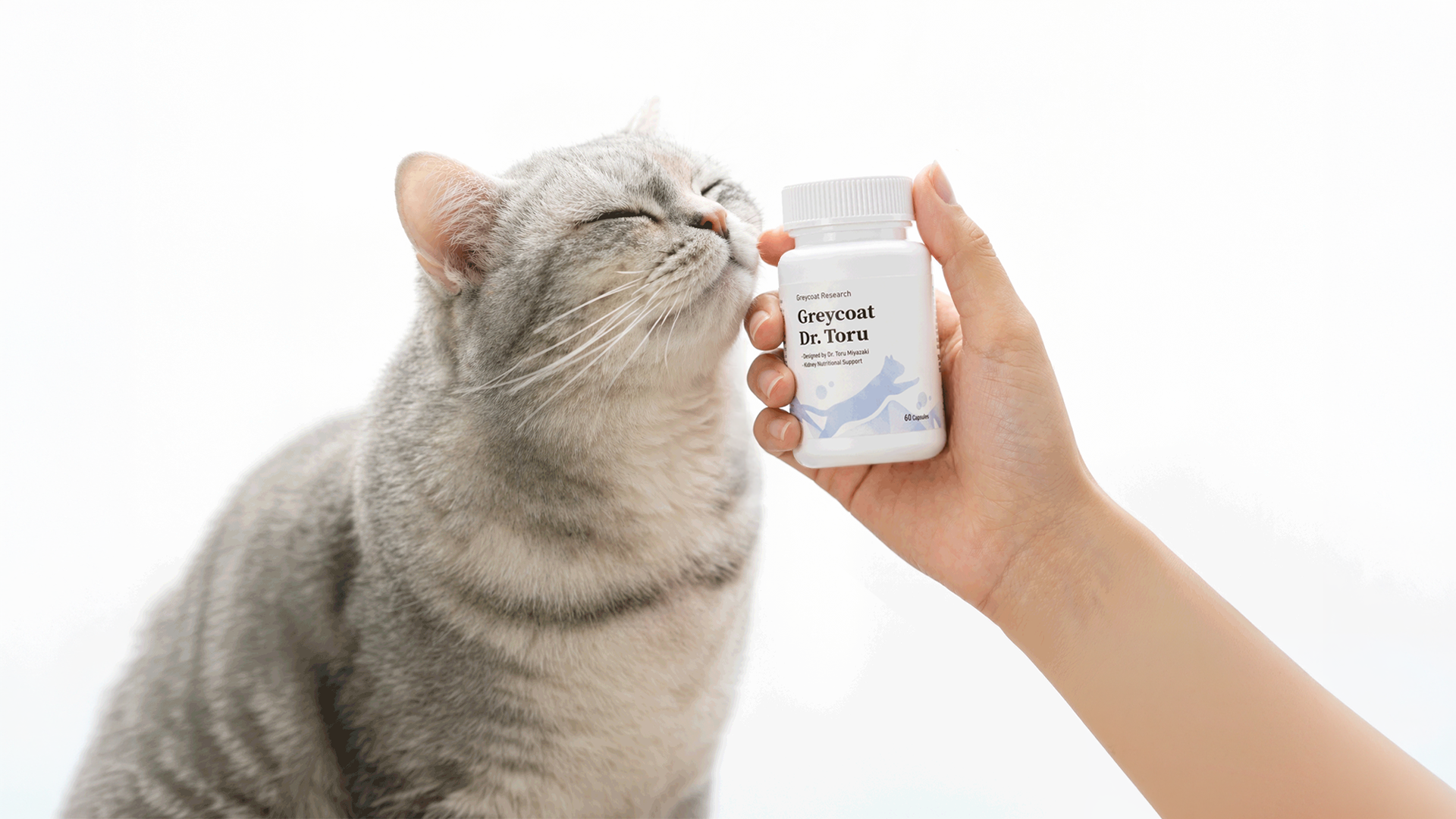
Supplement Routine: Greycoat Dr. Toru, 1 capsule in the morning and 1 in the evening, as reported by the guardian
Feeding Method: Capsule powder sprinkled over a kidney-support purée treat
Before Miya’s health checkup, her guardian had noticed several changes at home.
Miya vomited about once a week. On some weeks, she vomited two or three times. She was also less active and spent most of the day lying down. Her appetite had decreased significantly.
By the next morning, Miya had often eaten less than one-quarter of the food served the day before.
At first, her guardian thought these changes might simply be normal cat behavior.
Miya’s guardian shared:
“Before starting the supplement, Miya vomited about once a week, and sometimes two or three times. I thought it was just because cats vomit often.”
A health checkup before an upcoming move prompted the guardian to take a closer look.
Miya’s Kidney-Related Lab Values
Initial bloodwork results from June 23, 2026
Follow-up bloodwork results from July 4, 2026
| Test Item | June 23 Checkup | July 4 Recheck | Change |
|---|---|---|---|
| Creatinine | 3.19 mg/dL | 2.0 mg/dL | Decreased by 1.19 mg/dL |
| BUN | 43.7 mg/dL | 28 mg/dL | Decreased by 15.7 mg/dL |
On June 23, Miya’s creatinine was 3.19 mg/dL, a value within the IRIS Stage 3 range. Her BUN was 43.7 mg/dL.
Her guardian had not expected to see these results in a cat who was only 5 years old.
A new care routine began two days later. At the July 4 recheck, Miya’s creatinine was 2.0 mg/dL, a value within the IRIS Stage 2 range. Her BUN was 28 mg/dL.
Changes were also becoming visible at home. Miya began eating more and walking into the living room again. For her guardian, seeing changes in both the bloodwork and Miya’s daily behavior brought meaningful relief.
Miya’s Care Routine
① A Kidney-Conscious Diet
Miya’s guardian changed her food to Royal Canin Renal Special.
The diet change was made alongside the other parts of Miya’s new routine.
② A Daily Supplement Routine
Miya’s guardian ordered Greycoat Dr. Toru the day after the June 23 checkup. The supplement routine began on June 25. Miya weighed approximately 4 kg at the time.
According to the guardian, she received one capsule in the morning and one capsule in the evening.
The guardian continued this routine every day.
③ A Less Stressful Feeding Method
At first, Miya’s guardian tried giving the capsule whole. This was stressful for both Miya and the guardian. Rather than continuing with this method, the guardian changed the feeding method.
The capsule was opened, and the powder was sprinkled over a kidney-support purée treat. Miya accepted this method well. Finding a feeding method that Miya and her guardian could continue every day became an important part of the routine.
④ Follow-Up Bloodwork
Miya returned for follow-up bloodwork on July 4. This allowed her guardian to compare the laboratory values with the changes noticed at home.
The guardian did not rely on appetite or activity alone. Miya’s bloodwork and daily behavior were monitored together.
What Changed at Home
After the new routine began, Miya’s guardian noticed that she was eating more and moving around the home again. Before the routine, Miya had spent most of the day lying down and rarely came into the living room.
She had not fully returned to her previous activity level, but she was beginning to come out more often.
The guardian wrote:
“After changing Miya’s food to Royal Canin Renal Special and giving the supplement every day, Miya did not return to running around as before, but did begin coming into the living room again.”
Miya’s food intake also increased noticeably. The guardian later reported that Miya’s weight had increased to the 5 kg range.
At the July 4 recheck, creatinine had decreased from 3.19 mg/dL to 2.0 mg/dL, and BUN had decreased from 43.7 mg/dL to 28 mg/dL. For Miya’s guardian, the results were difficult to believe at first.
“I never thought the values would improve in such a short time.”
At the time of the review, the guardian was continuing the morning and evening supplement routine alongside the kidney-conscious diet. Another checkup was planned for the following month.
Why Miya’s Story Matters

Miya’s story began with changes that could easily have been dismissed. Vomiting could have been seen as common cat behavior. Reduced appetite could have seemed temporary. Spending more time lying down could have appeared to be a normal change in behavior. But these signs appeared together.
Miya was vomiting regularly, eating very little, and rarely coming into the living room. The June 23 bloodwork gave her guardian a reason to act. The guardian changed Miya’s diet, began daily nutritional support, found a less stressful feeding method, and completed follow-up bloodwork.
Nine days after the new routine began, Miya’s kidney-related values were lower. At home, she was also eating more and coming into the living room again.
Miya’s story is not only about two bloodwork results. It is about noticing changes at home instead of dismissing them as normal cat behavior. It is about finding a routine that both the cat and guardian can continue. It is also about monitoring daily behavior and laboratory values together.
For Miya’s guardian, seeing Miya eat more and come out into the living room again was not a small change. It was a meaningful part of Miya’s kidney care record.
※ Miya’s results reflect her overall care routine, which included a kidney-conscious diet, Greycoat Dr. Toru, a less stressful feeding method, and follow-up bloodwork. The July 4 recheck was completed nine days after the new routine began, and the changes cannot be attributed to any one part of the routine. Diagnosis and treatment should always be guided by a veterinarian.
Kidney care early
can make a difference for your cat.
Alongside a renal diet, add AIM-based daily care with Greycoat Dr. Toru.