Learn
Even at 15, Milo Still Runs Around the House : A 9-Month Stage 2 Kidney Care Record

(15-Year-Old Milo Still Runs Around the House)
For this month’s kidney care case, we are sharing the story of Milo, a 15-year-old cat.
Milo is a male Abyssinian born in 2011, living in Jeju Island with his guardian, Bebe.
As he got older, more careful health management became necessary,
so Bebe, regularly checked Milo’s kidney values through routine checkups.
Then, in July 2025, Milo’s kidney values were found to be elevated during a regular examination.
Creatinine 2.20 — HIGH.
From that day on,
Bebe, Milo’s guardian, decided to review Milo’s kidney care routine together with Greycoat Research.

What kind of cat is Milo?
| Category | Details |
|---|---|
| Name | Milo |
| Age | 15 years old, male Abyssinian born in 2011 |
| Kidney Care Status | Managed as Stage 2 |
| Care Routine Started | July 2025 |
When Milo’s Values Became Elevated
On the day the results came in, his guardian shared them with Greycoat Research right away.

Looking at one number alone may make it seem like things have worsened,
but the interpretation can change when the full context is considered.
In Milo’s case, we looked at his increased activity level, weight changes, appetite, and overall condition together and set the direction for his care.
Milo’s 3-Part Routine
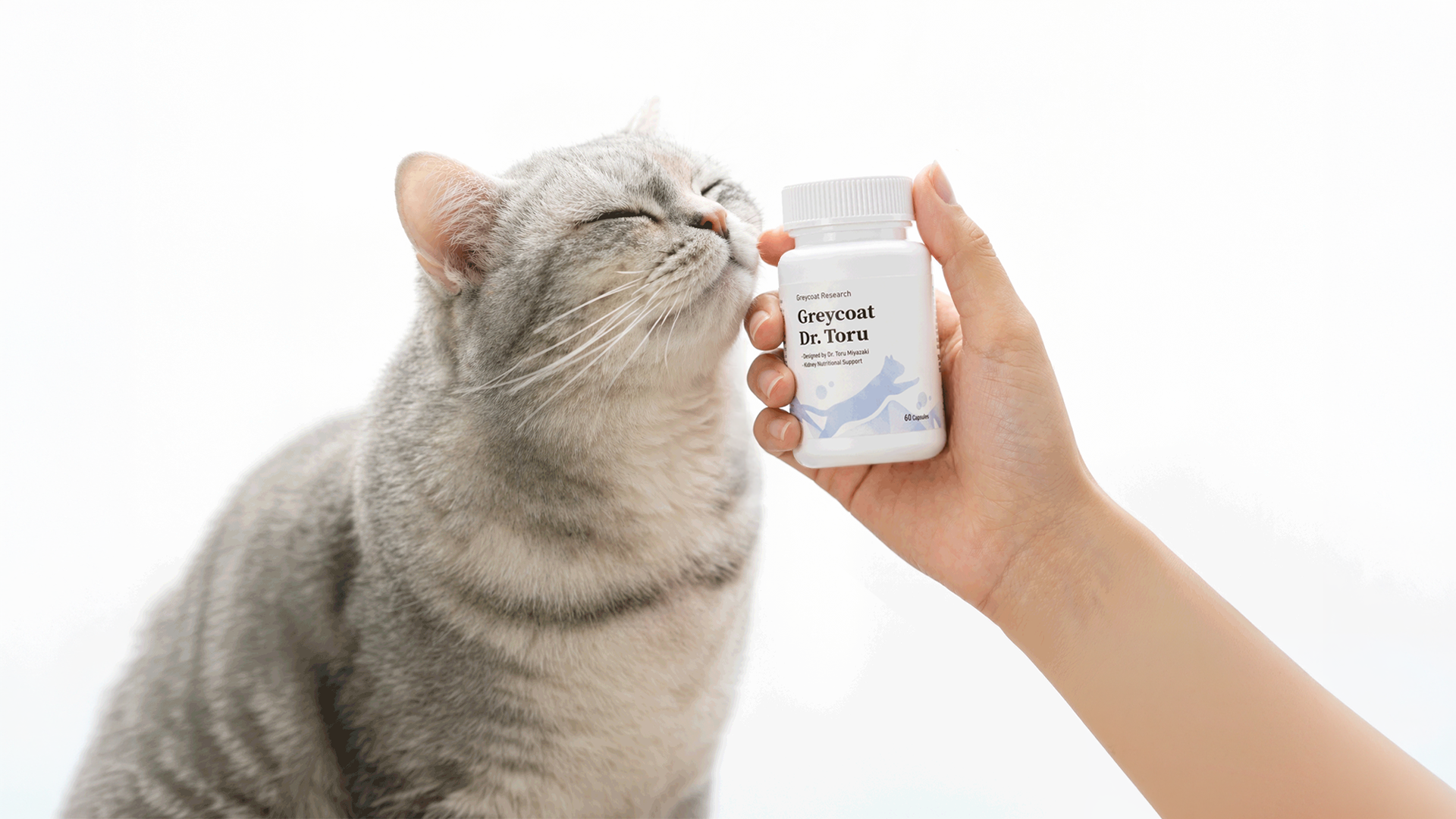
① Daily Feeding of Greycoat Dr. Toru, Intensive, and Probiotics
Morning and evening, Milo’s guardian maintained the routine consistently for 9 months.
At first, giving pills was so difficult that Milo resisted with his whole body.
But after using a Pill Dispenser as guided, he now accepts pill feeding much more easily.
② Increasing Wet Food Intake
His water intake naturally increased, and afterward, his phosphorus (PHOS) values also showed a relatively stable trend.
③ Sharing Changes Right Away
Changes in bloodwork values, weight, activity level — even small changes were shared with Greycoat Research immediately.
The Changes Seen Before the Numbers


Before the numbers changed, there were changes that could be seen in Milo’s daily life.
After using the litter box, he would run around the house, he would follow his guardian asking for food, and even when a spring cold spread through the household, he passed through it without trouble.

(After using the litter box, he seems to feel so good that he gets the zoomies and even runs around trying to catch Angeum.
He’s been moving around a lot more than before.)
9 Months Later, Changes Also Appeared in the Numbers
※ To avoid exposing personal information, we have attached the test result pages without guardian information.
<Before Bloodwork values page from July 21, 2025>

<After Bloodwork values page from April 20, 2026>

| Test Item | July 2025 | April 2026 | Change |
|---|---|---|---|
| Creatinine (mg/dL) | 2.20 (HIGH) |
1.81 (NORMAL) |
Lower than the previous measurement |
| PHOS (mg/dL) | 6.5 | 3.8 | Stable trend |
※ Milo’s record should be understood as one individual care story, not as proof that any supplement caused the bloodwork changes. His routine included regular checkups, wet food, hydration support, and nutritional care.
Compared to July 21, 2025, Milo’s creatinine value was recorded at 1.81 in April 2026, compared to 2.20 in July 2025.
His phosphorus (PHOS) value, another number that guardians caring for cats with kidney concerns often monitor closely, was recorded as 6.5 in July 2025 and 3.8 in April 2026.
Milo’s guardian maintained a consistent daily routine for 9 months, including regular checkups, wet food, hydration support, and a nutrition-focused routine.

※ Results may vary depending on each cat’s individual condition, and this does not indicate a treatment effect.
Even at 15 years old with Stage 2 chronic kidney disease, Milo still runs around the house today.
The changes over 9 months did not happen suddenly.
Behind those changes were daily care, consistent observation, and the guardian’s effort to maintain the routine.
We hope this record will be helpful for guardians of cats who are facing the same concerns with kidney care.
※ The following bloodwork values are shared as one individual case record. They should not be interpreted as evidence that any Greycoat Research product treats, prevents, or improves chronic kidney disease. Diagnosis and treatment should always be guided by a veterinarian.
Where to Find Milo’s Full Story
You can read more about Milo’s kidney care journey on his Instagram.


Conversation Log with Milo's Guardian
※ The following conversation is the original, unedited exchange between Milo’s guardian and our team.
Through an instant messaging app, we quickly shared updates on his condition and adjusted his care routine accordingly.


Kidney care early
can make a difference for your cat.
Alongside a renal diet, add AIM-based daily care with Dr. Toru.