알아보기
Port’s Stage 2 Kidney Care Diary: Six Months of Bloodwork and Daily Life
Port’s Stage 2 Kidney Care Diary:
Six Months of Bloodwork and Daily Life

SDMA 20 → 16 over six months. Here’s what daily care looked like for Port.
Port loves food, company, and a good cuddle.
Maria rescued him from the streets of a Greek island. He is a 10-year-old male domestic shorthair, and Maria reported his weight as 5.9 kg, or about 13 lb, when she shared his story.
Caring for him has taken patience, persistence, and a willingness to adapt the routine to his preferences.
Finding the right care for Port
Maria says Port’s kidney condition was first detected at Stage 1. She also reports that he has FIV and has received care for dental problems and high blood pressure.
He underwent dental extractions in October 2025. His high blood pressure was identified in January 2026, and Maria reports that it has been managed with medication since then.
Finding the right support took time. Maria says she changed veterinarians and clinics several times while looking for care that suited Port’s needs. She also researched options herself and learned from other cat parents.
When she shared his story, Maria described him as stable at Stage 2.
His January-to-July bloodwork
<January 2026 evaluation results>

<July 2026 evaluation results>

The January and July values below come from laboratory reports included with Port’s story. Maria also reported an April SDMA value.
| Test | January 27, 2026 | April 2026 | July 2026 |
|---|---|---|---|
| SDMA | 20 µg/dL | 18 µg/dL | 16 µg/dL |
| Creatinine | 2.3 mg/dL | — | 2.3 mg/dL |
| BUN | 30 mg/dL | — | 32 mg/dL |
SDMA was lower in July, while creatinine was the same on both laboratory reports. BUN rose slightly, with both results within the reports’ reference range of 16–38 mg/dL. July’s SDMA was still above the listed reference range of 0–14 µg/dL.
Maria highlighted the gradual decrease in SDMA when telling Port’s story. Between appointments, her attention often returned to a much more immediate concern: the food left in his bowl.
Three meals, sometimes with a spoon
Port eats three meals a day. Maria offers wet food first because she wants to include more moisture in his meals.
Port has his own preferences. He sometimes leaves about half the wet food behind and waits for dry food to appear.
Sometimes, offering it from a spoon helps.
“So, I have to go after him with a spoon and his bowl to convince him to eat more of the wet food, and it works.”
It is a scene many cat parents may recognize: a half-full bowl, a cat with clear opinions, and another attempt to find what works.
Maria reports feeding Hill’s canned wet food and Royal Canin Select dry food, without specifying the exact recipes.
Her advice is to get creative with food and encourage cats to eat without forcing them.
Fitting care into everyday life
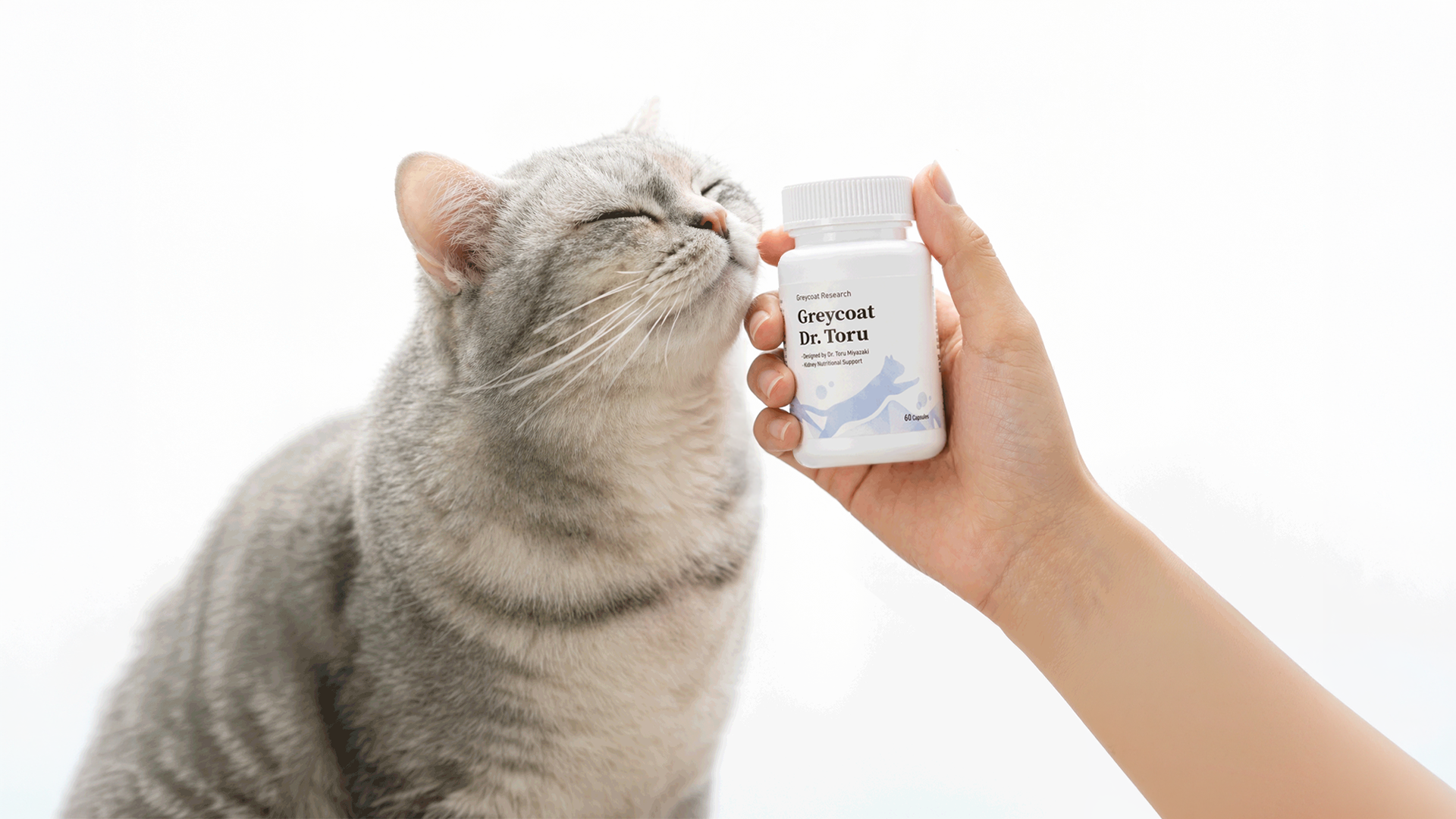
Maria found Greycoat Research while looking into care options for Port. She reports using Rebalance and Dr. Toru, alongside PorusOne, CBD oil, and omega-3.
She uses an AddOne liquid treat when giving supplements and says it helps Port finish the full portion. For capsule supplements other than omega-3, she says she opens the capsules, mixes the contents into the treat, and offers the mixture on a spoon.
“Naturally, the supplements are spread throughout the day and are not given all at once.”
Maria also reports giving Port Amodip (amlodipine) for high blood pressure. When she shared his story, she said he was receiving subcutaneous fluids—fluids given under the skin—but not very often.
Meals, supplements, medication, and appointments all have to fit into everyday life. Maria keeps adjusting the practical details to suit Port.
Learning from people who understand
Other cat parents were another source of information for Maria.
“I would also like to stress that looking for information on communities also helps.”
She says other caregivers helped her learn about PorusOne and blood pressure monitoring while sharing their experiences with cats who had kidney concerns.
Here are three practical ideas you can use in your own cat’s routine:
- Notice what your cat actually eats. Keep wet and dry food amounts separate in your notes. This helps you see whether your cat is leaving wet food but still eating dry food, or eating less of both.
- Check whether your cat finishes the supplement mixture. If some is left, note that it was partly eaten rather than marking it as finished.
- Keep a simple timeline. Put test results and any changes to food, medication, or supplements on one timeline.
The everyday life Maria wants to protect
Maria wants to give the sweet boy she rescued as many comfortable, happy years as possible.
For Port, life still includes something good to eat, someone nearby, and a cuddle.
That is the life she is working to protect.
[Educational Disclaimer]
This content is provided for general educational and informational purposes only.
It is not intended as a substitute for professional veterinary advice, diagnosis, or treatment, nor is it intended to diagnose, treat, cure, or prevent any disease.
Please consult your veterinarian regarding your cat’s health and before making any changes to your cat’s diet, supplements, or care routine.
Kidney care early
can make a difference for your cat.
Alongside a renal diet, add AIM-based daily care with Dr. Toru.